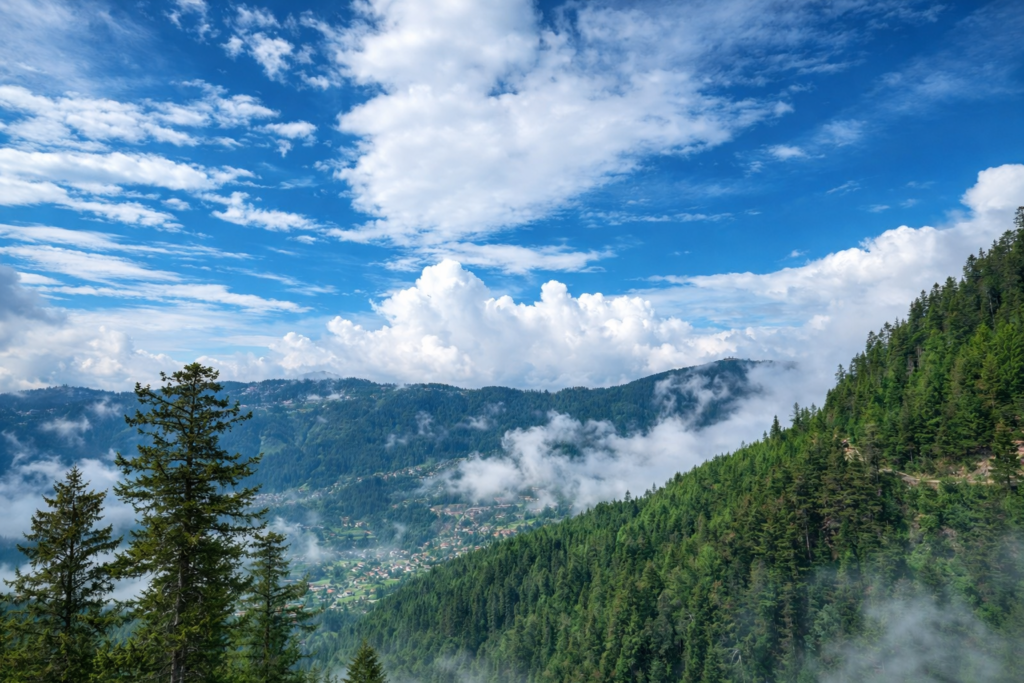
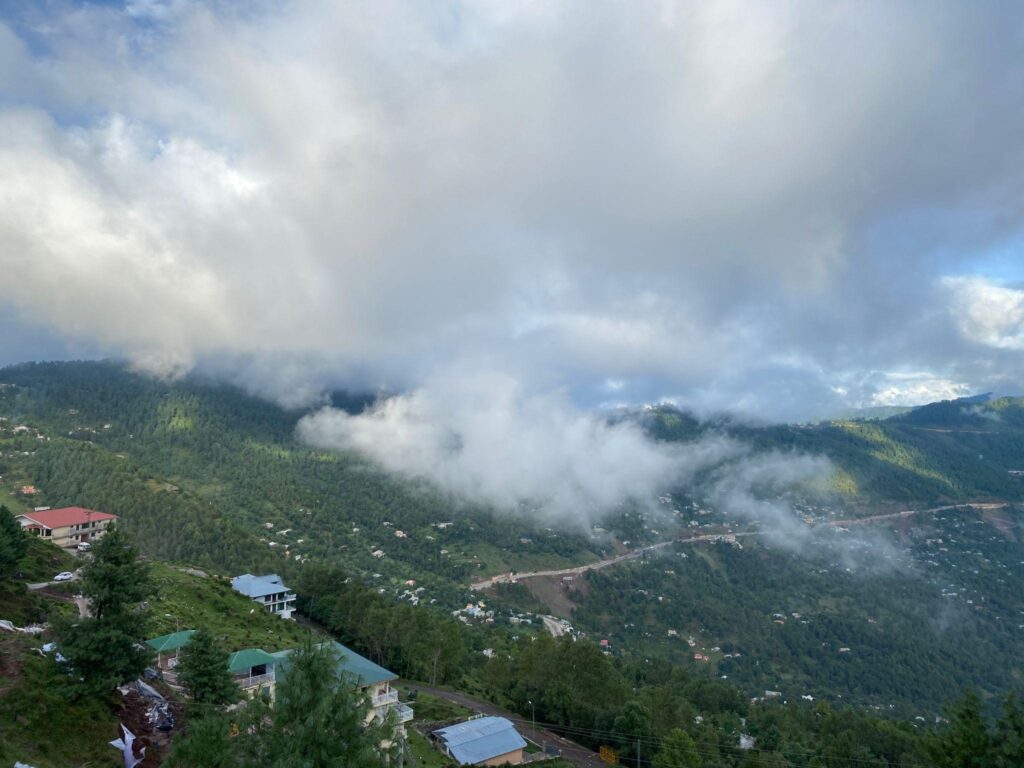
The elevation of the Murree Hills from a modest ridge known as Mussiarri to the premier hill station of South Asia is a testament to the intersection of colonial strategic necessity and the enduring human desire for climatic sanctuary. Located in the Pir Panjal Range of the Himalayas, Murree stands at approximately 2,291 meters above sea level and serves as the gateway to the broader Galyat region. The town’s historical genesis in 1851 as a sanatorium for British troops established a precedent for its development as a “Queen of Hills,” a title that reflects both its aesthetic majesty and its central role in the regional tourism economy. By 1853, the permanent town was constructed, anchored by the iconic Mall Road and consecrated by the Holy Trinity Church, setting the stage for over a century and a half of evolution from a military retreat to a bustling hub of domestic and international tourism.
The Historical and Geographical Foundation of the Murree Hills
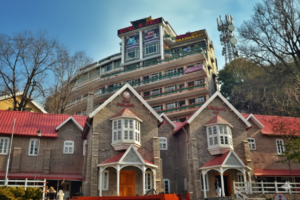
The development of Murree was driven by the British annexation of the Punjab in 1849, which necessitated a high-altitude retreat conveniently located near the Rawalpindi military cantonment. The town’s architecture, crowning the summits and sides of an irregular ridge, still maintains a European character, marked by Victorian-style buildings, Gothic churches, and winding roads that navigate the steep topography. This colonial footprint is not merely aesthetic; it is the structural backbone upon which the modern family experience is built. The transition from a seasonal pastureland owned by the Dhund Abbasi tribe to the summer headquarters of the Punjab Government between 1873 and 1875 illustrates the town’s early importance as an administrative and social centre.
Historical Milestones of Murree (1849–2022)
| Year | Milestone Event | Strategic Significance |
| 1849 | Annexation of Punjab | Created a strategic requirement for a regional hill station for British troops. |
| 1851 | Foundation of Murree | Established as a military sanatorium to provide relief from the plains’ heat. |
| 1853 | Construction of Mall Road | Developed the town’s main commercial, social, and administrative center. |
| 1857 | Local Rebellion | Local tribes attacked the British garrison, marking a significant colonial conflict. |
| 1860 | Foundation of Lawrence College | Established elite educational infrastructure at Ghora Gali. |
| 1873–1875 | Summer Capital of Punjab | Murree reached peak administrative importance before the capital moved to Shimla. |
| 1891 | Construction of Moto Tunnel | Major engineering project for water supply linking Ayubia and Khaira Gali. |
| 1892 | Pipeline Track Completion | Developed rainwater supply infrastructure for the Galyat region. |
| 1924 | Kashmir Point Catholic Church | Added a significant religious and heritage landmark at a high-altitude viewpoint. |
| 2020 | Rediscovery of Moto Tunnel | Revival of historical infrastructure for heritage and tourism value. |
| 2022 | Heavy Snowstorm Tragedy | Led to improved safety measures, weather monitoring, and traffic management systems. |
The geographical allure of Murree is complemented by its climate, which provides a refreshing escape from the intense heat of the plains, where summer temperatures often exceed $40^\circ\text{C}$. In contrast, Murree maintains a pleasantly moderate climate from June to August, while the winter months from December to February transform the region into a snowy paradise, attracting “snow adventure lovers” and honeymooners alike. This dual-seasonality defines the operational strategies for family trips in 2025 and 2026.
For a family trip to be truly successful, it must balance the kinetic energy of the bazaar with the restorative stillness of the mountain forests. The following ten points represent a curated selection that satisfies historical curiosity, adventurous impulses, and the need for a tranquil connection with nature.
1. Mall Road: The Vibrant Heart and Sociological Epicentre
Mall Road is the psychological and commercial core of Murree, where life “never slows down”. As the town’s primary thoroughfare since 1853, it has evolved into a bustling bazaar packed with handicraft stalls, cafes, and shops selling high-quality dry fruits and artisanal items. For families, the Mall is a sensory experience defined by the aroma of “karak chai” and the visual tapestry of traditional Kashmiri shawls. The road is anchored by GPO Chowk, where the colonial-era General Post Office stands as a symbol of the town’s heritage.
The sociology of the Mall involves a delicate dance between preserving colonial charm and meeting the demands of modern mass tourism. Established institutions like Usmania Restaurant and Lintott’s offer a link to the region’s culinary history, while newer additions like Chayee Khana cater to a younger generation seeking cosy, modern environments. Accessibility is a key feature here, as the Mall is one of the most accessible spots for elderly visitors and children, providing a level, albeit crowded, walking surface.
2. Kashmir Point: The Sanctuary of Panoramic Vistas
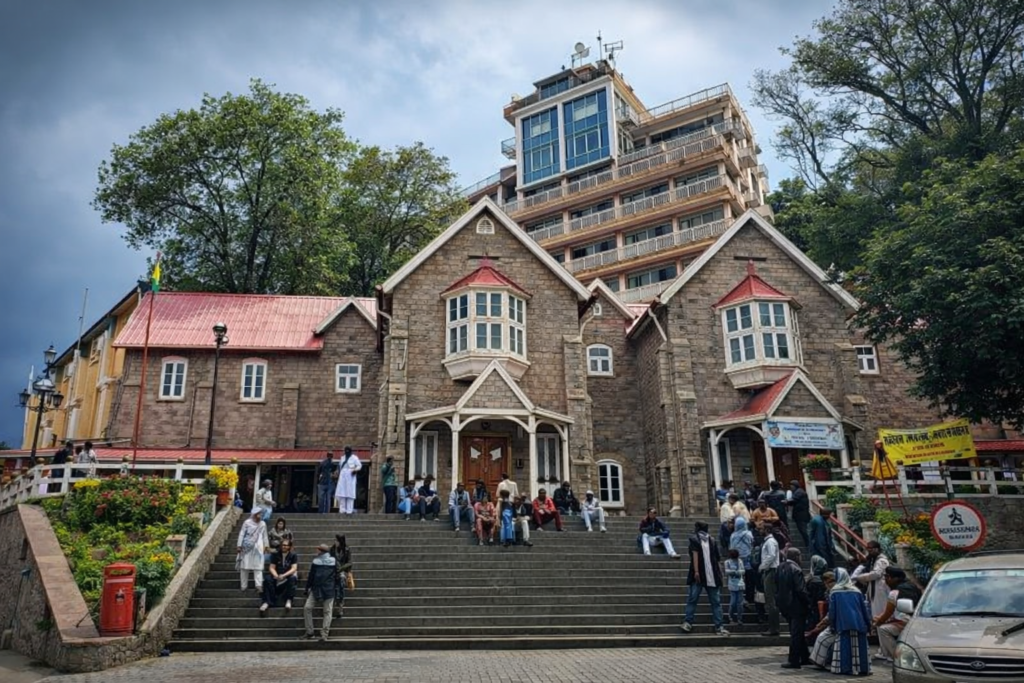
Located at the higher, more serene end of the ridge, Kashmir Point offers the most breathtaking panoramic views of the surrounding mountains and valleys. It provides a stark contrast to the Mall’s noise, making it the ideal location for families seeking peaceful walks and high-quality photography. On clear days, the snow-crowned mountains of Kashmir are visible in the distance, a sight that has captivated travellers since the mid-19th century.
The point is home to several historic landmarks, including a Catholic church established in 1924 and St. Danny’s school. The walk to Kashmir Point is shaded by towering pines, where the “pine needle song”, the gentle whistling of the wind, replaces the cacophony of the bazaar. This area represents the more refined side of Murree, where the “European aspect” of the town’s origins is most palpable.
3. Pindi Point: Sunset Aesthetics and the Chairlift Experience
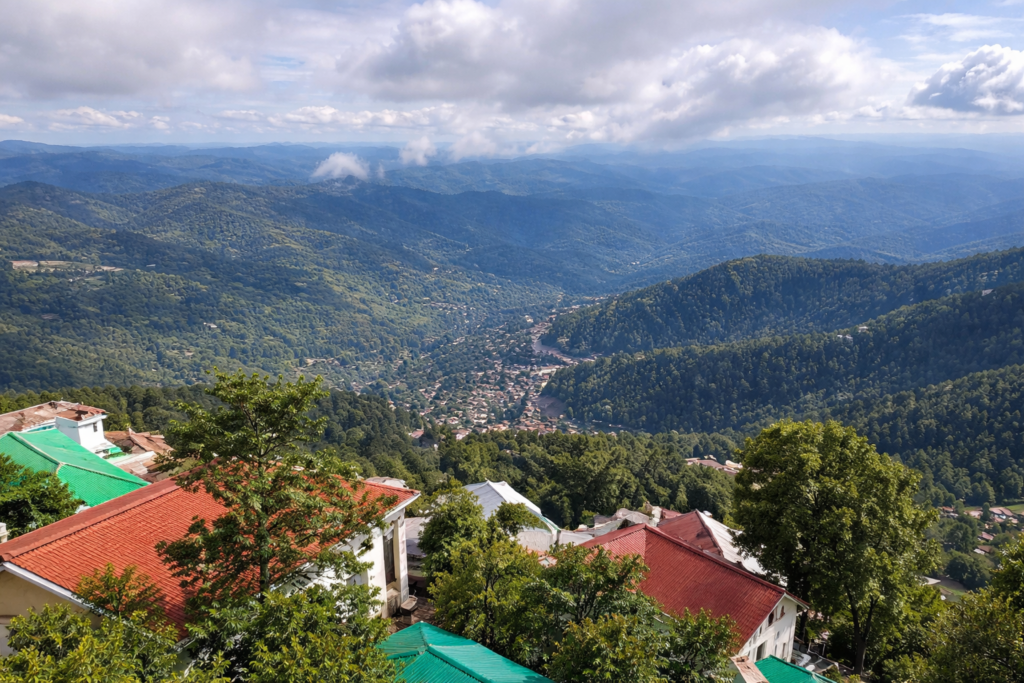
Pindi Point marks the southwestern terminus of the Murree ridge, offering a “breathtaking view of the twin cities,” Rawalpindi and Islamabad, particularly as the sun sets and the city lights begin to flicker in the valley below. The primary attraction for families here is the chairlift ride, which descends through pine forests towards Ghora Gali, providing a unique vertical perspective on the landscape.
Pindi Point is also a site of local historical intrigue, with legends suggesting it as the potential site of “Mary’s Grave,” a notion that historically drew British interest to the area. However, it remains a subject of folklore. Families must be mindful of the local Rhesus monkey population here; while they offer amusement, strict safety protocols must be observed to prevent aggressive encounters.
4. Patriata (New Murree): The Apex of Adventure and Engineering
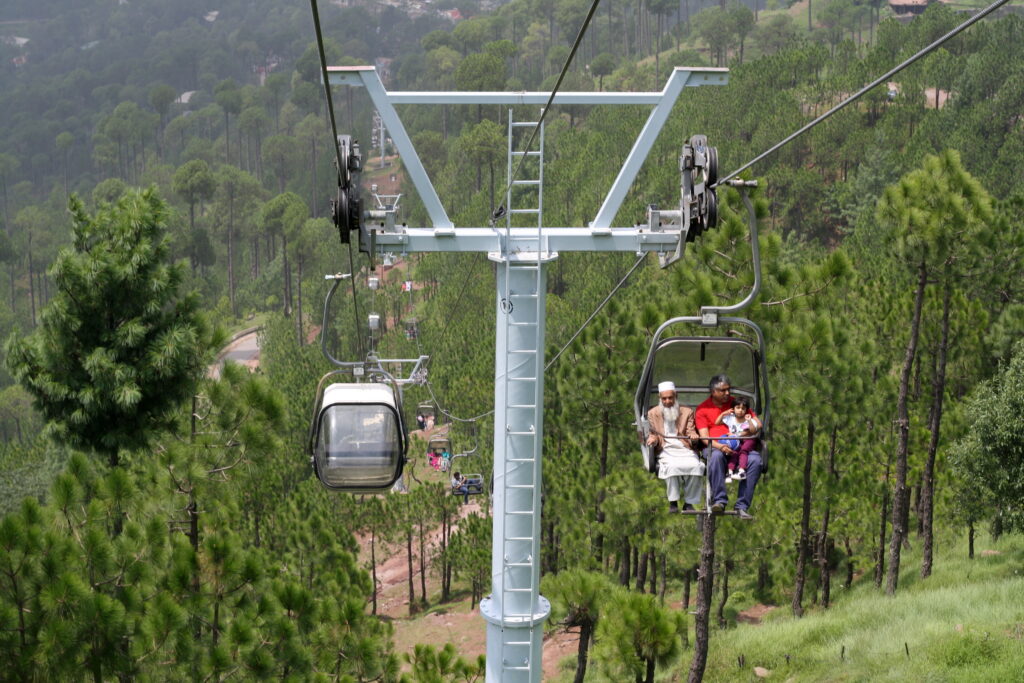
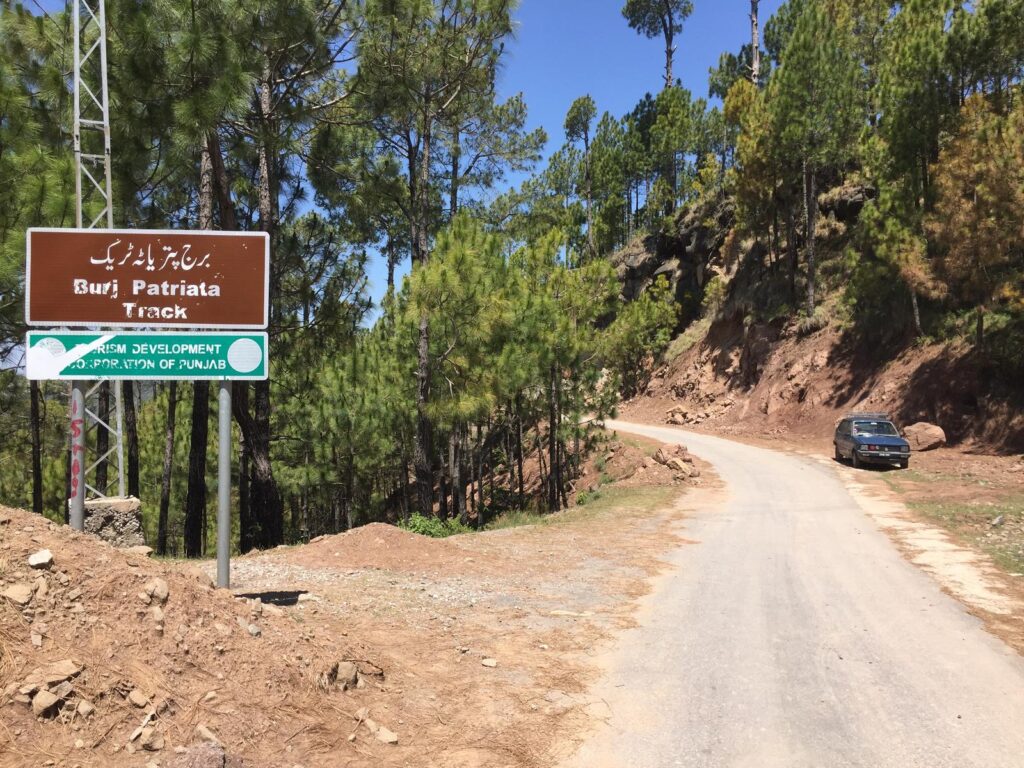
Located 15 kilometers from the main town, Patriata represents the modern expansion of the region’s tourist infrastructure. Often referred to as New Murree, it is situated at a higher elevation, offering cooler temperatures and denser forest cover. The site is famous for its integrated chairlift and cable car system, which is widely considered the longest and most advanced in Pakistan.
The journey to the Patriata summit is a two-stage experience: a chairlift ride over emerald hills followed by a gondola-style cable car that soars above misty valleys. At the top, the environment is wilder and more tranquil, with a small children’s park and opportunities for horse riding and trekking. It is a “must-visit” for families seeking a touch of adrenaline alongside panoramic beauty.
5. Ayubia National Park: A Living Biodiversity Sanctuary
Established to protect the region’s unique high-altitude ecosystem, Ayubia National Park is a “living, breathing wonderland” spanning multiple hill stations. The park is a critical habitat for the Indian leopard, the golden eagle, and the rare red giant squirrel. For families, Ayubia offers a blend of education and recreation, with a chairlift that provides spectacular views of snow-covered valleys in winter and lush pine forests in summer.
The park stands out as a site of environmental significance, where strict regulations protect the biodiversity of the Pir Panjal Range. Visitors can engage in birdwatching, spotting colourful and exotic species in their natural habitats. The park’s infrastructure includes well-maintained trails and picnic spots, making it an ideal day-trip destination for families staying in central Murree.
6. The Ayubia Pipeline Track: The Historic Walk of Resilience
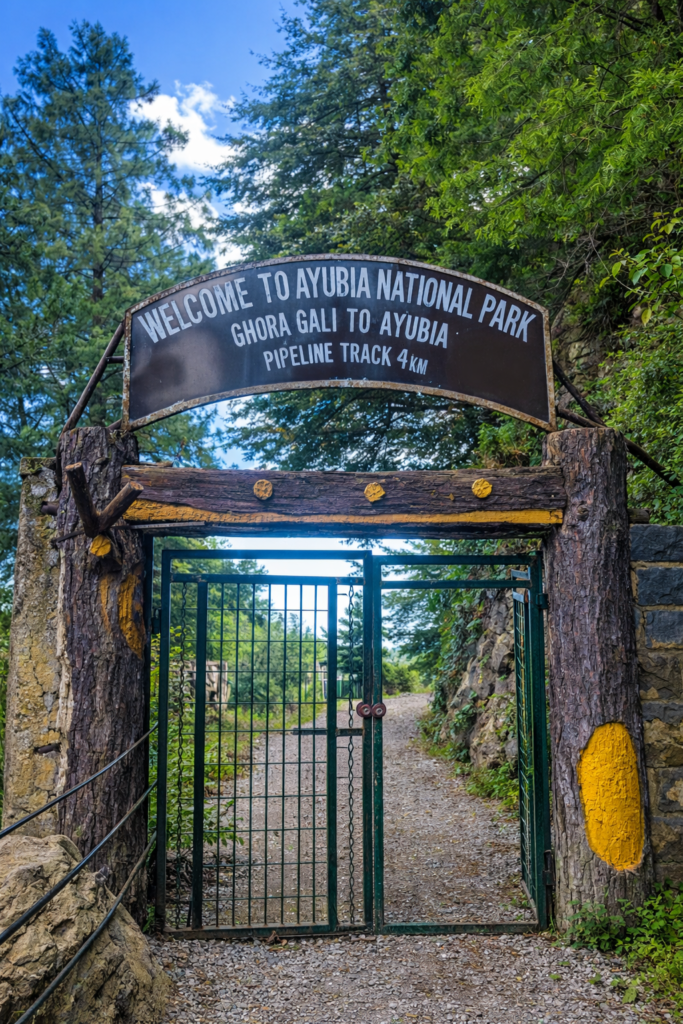
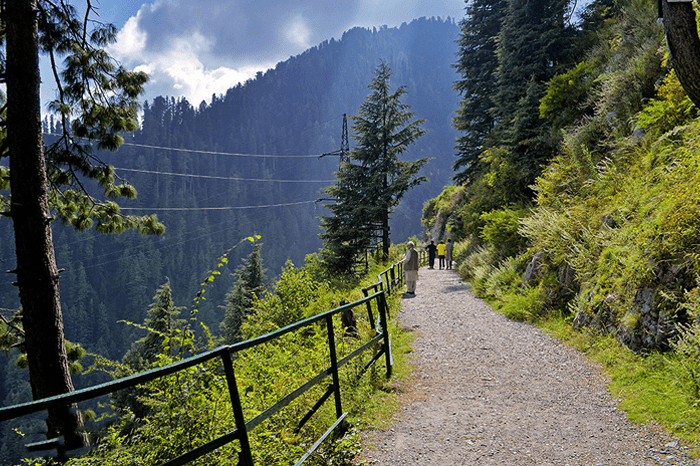
Stretching 4 kilometers between Ayubia and Dunga Gali, the Pipeline Track is perhaps the most famous and accessible walking trail in Pakistan. Built in 1892 by the British regime to supply rainwater to the surrounding areas, the track follows a perfectly gentle gradient, making it ideal for families with elderly members or young children.
The trail winds through thick forests of pine and oak, offering glimpses of freshwater springs and vibrant wildflowers. A central feature of the track is the Moto Tunnel, an 1891 engineering
marvel that was rediscovered and restored in 2020. The tunnel, with its atmospheric lighting and dripping mountain walls, provides a tangible link to the 19th-century waterworks of the Galyat.
7. Nathia Gali: The Sovereign of Serenity and Hiking
Located 34 kilometres from Murree, Nathia Gali is the most popular and picturesque hill station in Abbottabad District. Renowned for its cool temperatures and lush landscapes, it offers a “culturally peaceful environment” that is often preferred by those seeking to avoid Murree’s commercial bustle.
Nathia Gali serves as the administrative hub of the Galyat and is famous for its colonial-style architecture, including the century-old St. Matthew’s Church. The town’s bazaar is a prime place to buy authentic local handicrafts and dried fruits. For active families, Nathia Gali is the starting point for the trek to Miranjani Peak, the highest point in the Galiyat range.
8. Bhurban: The Confluence of Luxury and Nature
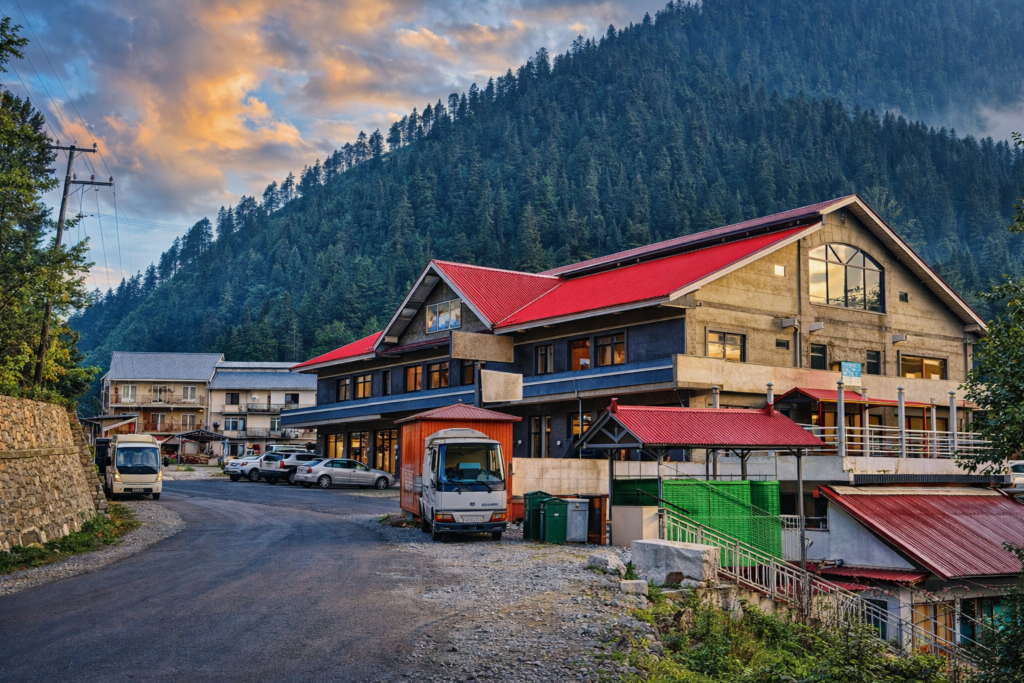
Bhurban, situated a short drive from Murree, is synonymous with “luxury stays and scenic beauty”. Known for its five-star hotels and the Chinar Golf Club, it offers a more sophisticated retreat for families. The area is characterised by manicured yards and peaceful surroundings, providing a “classy experience” away from the central tourist congestion.
The Pearl Continental Bhurban is a landmark resort in this area, offering an amphitheatre for performances and extensive children’s amenities, including a wildlife park. Bhurban is ideal for families seeking a combination of tranquillity and high-end services, with easy access to the nearby Ayubia National Park for nature excursions.
9. Mushkpuri Top: The High-Altitude Meadow Experience
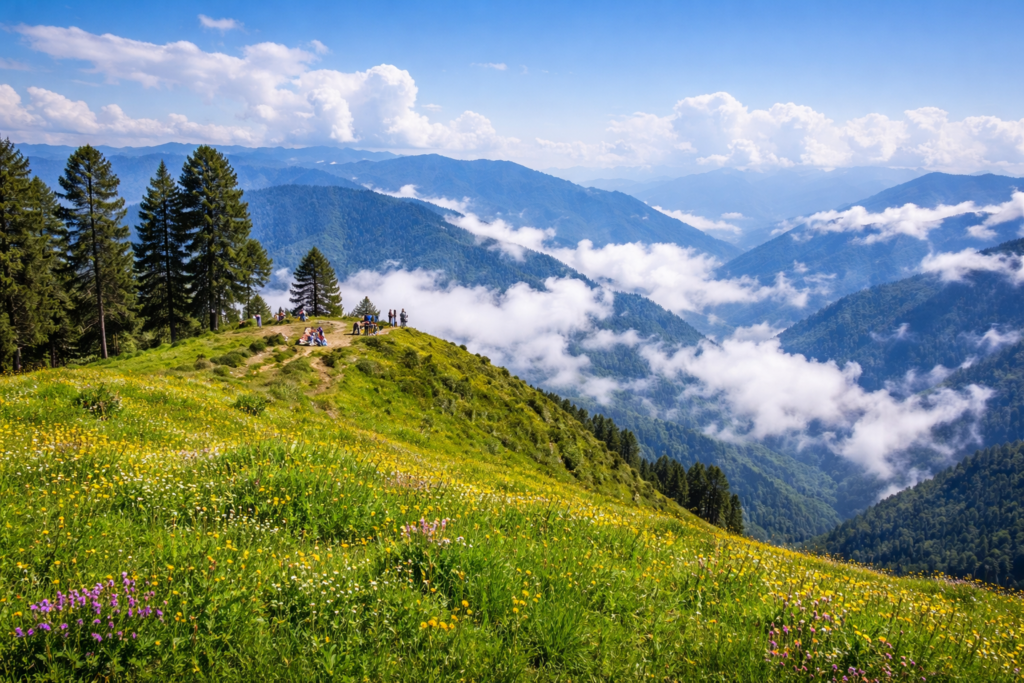
For families with a penchant for trekking, Mushkpuri Top is a mandatory destination. At 9,200 feet, it is the second-highest peak in the Galyat, accessible via a moderate 2.5km trail from Nathia Gali or Dunga Gali. The trail is famous for its verdant meadows that burst into a “vibrant tapestry of flowers” during the monsoon and post-monsoon seasons.
From the peak, hikers are rewarded with a 360-degree view that encompasses the Kashmir Valley, the Jhelum River, and the distant snowy peaks of the Himalayas. The experience of standing in these high-altitude meadows, surrounded by “mist-bathed valleys,” offers a sense of the region’s raw, untouched beauty, fundamentally different from the urban hill-station experience.
10. Ghora Gali and Lawrence College: The Legacy of Colonial Education
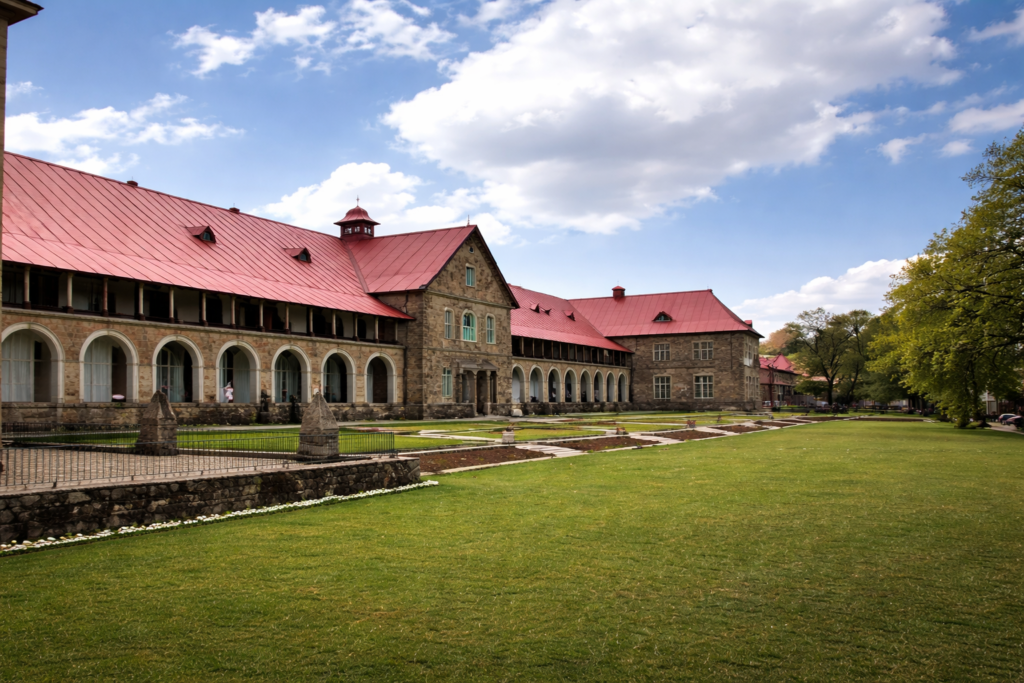
Ghora Gali, located just 4 kilometers from Murree, is home to the historic Lawrence College, established in 1860 for the orphans of British soldiers. Named after Sir Henry Lawrence, the college is one of the oldest residential educational institutions in Pakistan and follows a public school model influenced by British colonial traditions.
The campus is a masterpiece of colonial architecture, spanning 100 acres of the Pir Panjal foothills. While the school itself is an active educational institution, the surrounding area of Ghora Gali retains a distinct “colonial charm” and historical significance. The LCGG Museum, established in 2017, preserves the college’s artefacts and archives, offering visitors a window into the educational and social history of the British Raj in northern Pakistan.
| Point | Elevation (ft) | Primary Appeal | Accessibility for the Elderly |
| Mall Road | 7,500 | Shopping & Culinary Hub | High (Level ground) |
| Kashmir Point | 7,800 | Panoramic Views & Peace | Medium (Slight uphill) |
| Pindi Point | 7,400 | Sunset & Chairlift | High |
| Patriata | 8,200 | Cable Car & High Peaks | Medium (Wait times) |
| Ayubia | 8,000 | Wildlife & Nature Trails | Medium |
| Pipeline Track | 8,000 | Historic, Flat Forest Walk | Very High (Flat) |
| Nathia Gali | 8,200 | Lush Landscapes & Hiking | High (Bazaar area) |
| Bhurban | 6,500 | Luxury & Golf | High (Paved areas) |
| Mushkpuri Top | 9,200 | Wild Meadows & Trekking | Low (Steep hike) |
| Ghora Gali | 6,400 | Colonial History & Education | High |
The 3-Day Story-Led Itinerary: A Strategic Blueprint
The goal of this itinerary is to curate a “perfect family trip” that avoids the exhaustion of over-travel while maximising the diversity of experience. It emphasises the “slow travel” movement, allowing families to actually connect with the environment rather than just ticking off points.
Day 1: The Colonial Narrative and the Evening Glow
The journey begins with an ascent from the plains of Punjab. Families travelling from Lahore should consider a morning departure to enjoy the transition as the air turns “cool and crisp” upon entering the Murree Expressway.
- 10:00 AM – 12:00 PM: Arrival in Murree and check-in at a central hotel like Hotel One or Grand Taj, ensuring on-site parking to avoid the town’s notorious congestion.
- 1:00 PM – 3:00 PM: A lunch of “Chicken Karahi” or “Trout Fish” at a Mall Road institution, followed by an exploration of the Holy Trinity Church (1857), allowing kids to see the Gothic architecture and historical plaques.
- 3:30 PM – 5:30 PM: A walk to Kashmir Point. The path is lined with old pine trees that have “sticky resin” and “serrated needles,” providing a sensory introduction to the forest.
- 6:00 PM – 8:00 PM: Evening at Pindi Point to watch the sunset over Islamabad. A chairlift ride offers a “thrilling way to enjoy the natural beauty” as the lights of the twin cities begin to sparkle.
- Dinner: Traditional “Karak Chai” and snacks on Mall Road, engaging with the vibrant night culture.
Day 2: The Forest Song and the Galyat Traverse
Day 2 focuses on the Galyat range, moving further into the mountains to find the “harmony within a natural embrace”.
- 9:00 AM – 11:00 AM: Drive to Ayubia National Park. Families can ride the historic chairlift, which takes them high above the “misty valleys and pine forests”.
- 11:30 AM – 1:30 PM: The Pipeline Track walk. This 4km trail is a narrative of engineering history. Families can walk through the Moto Tunnel, hearing the “continuous dripping water” and touching the damp mountain walls.
- 2:00 PM – 4:00 PM: Arrival in Nathia Gali. A lunch of “Saag and Makai Roti” at Alpine Hotel provides a taste of the region’s culinary soul. Exploration of the local bazaar for handicrafts and traditional caps.
- 4:30 PM – 6:30 PM: For the adventurous, a short trek towards the base of Mushkpuri or a visit to the Lalazar Wildlife Park to see leopards and bird species.
- Night: Return to Murree or stay overnight in Nathia Gali to enjoy the “peaceful atmosphere”.
Day 3: The Adventure of the Peaks and the Descent
The final day focuses on the “New Murree” experience and the historical landmarks of Ghora Gali.
- 9:30 AM – 12:30 PM: Departure for Patriata. Families should arrive early to manage the queue for the chairlift and cable car. The $30$-minute ride to the top offers “breathtaking views of the mountains and greenery”.
- 1:00 PM – 2:30 PM: A visit to Bhurban for lunch at the PC Bhurban, providing a “classy and peaceful experience” before the journey back. Children can enjoy the wildlife park or the amphitheatre.
- 3:00 PM – 4:30 PM: A stop at Ghora Gali to see the exterior of Lawrence College and reflect on the “Never Give In” motto.
- 5:00 PM: Descent via the Murree Expressway. This route is the “safest and least tiring,” providing a smooth ride back towards the plains.
Logistical Mastery: Practical Guidance for the 2025-2026 Season
A family trip to the hills is as much about logistics as it is about scenery. In the 2025-2026 period, new safety and pricing structures have been established to manage the high volume of tourists.
Mobility and Transport: The Car Rental Paradigm
For families, a private car with a “highly-experienced mountain driver” is the most flexible and comfortable option. Roads like the Murree Expressway are well-maintained, but the smaller Galyat roads are “winding alpine paths” that require skill and patience.
Table 3: Estimated Car Rental Costs and Capacity (PKR/Day – 2026)
| Vehicle Type | Ideal Capacity | Estimated Cost (PKR/Day) | Best Use Case |
| Honda City / Toyota Corolla | 4–5 Members | 6,000 – 8,000 | Standard family sightseeing |
| Honda Civic | 4–5 Members | 10,000 | Premium comfort for long drives |
| Toyota Prado (Old Model) | 5–8 Members | 10,000 – 15,000 | Off-road excursions & larger groups |
| Toyota Hiace Grand Cabin | 8–12 Members | 11,500 – 13,500 | Large extended family tours |
| Coaster Saloon | 15+ Members | 20,000 – 25,000 | School or corporate family groups |
Drivers must be cautioned that “Air Conditioning (AC) does not work in Hilly Areas” due to the strain on the vehicle’s engine at high altitudes and steep gradients. Maintenance checks on tyres, engine oil, and radiator water are mandatory before leaving the plains.
The 2026 Ticket Pricing Guide for Families
Budgeting for a family of four requires understanding current entry fees and ride costs at the major attractions.
Table 4: Attraction Costs and Timings (2025–2026)
| Attraction | Ticket Category | Price (PKR) | Timings |
| Patriata Chairlift/Cable Car | General Return | 1,500 | 10:00 AM – 7:00 PM |
| Patriata Chairlift/Cable Car | Executive (No Queue) | 3,000 | 10:00 AM – 7:00 PM |
| Patriata Chairlift/Cable Car (Under 5 Years) | General | 500 | 10:00 AM – 7:00 PM |
| Ayubia National Park | Entry (Tourists) | 500 | Daylight Hours |
| Ayubia Chairlift | Per Person | 850 | Daylight Hours |
| Pindi Point Chairlift | Per Person | 1,000 | Daylight Hours |
Winter Safety and Environmental Resilience
Winter tourism in Murree has undergone a radical transformation in safety protocols following the 2022 snowstorm incidents. For 2026, authorities have implemented strict “Travel Advisories” that families must follow:
- Mandatory Snow Chains: During active snowfall, iron tyre chains are required for any vehicle attempting high-altitude passes, such as those near Nathia Gali.
- Carbon Monoxide Awareness: A critical danger in winter is CO poisoning. If a vehicle becomes stuck in the snow, families must ensure the exhaust pipe remains clear and that the windows are slightly cracked to prevent a fatal buildup of carbon monoxide while the engine is running for heat.
- Black Ice Phenomenon: Drivers must be aware of “black ice,” thin, invisible layers of ice that form under fresh snow and can cause loss of traction even for 4WD vehicles.
- Fuel and Food Reserves: It is advised to keep the fuel tank full and carry dry fruits and water, as traffic jams in snowy conditions can last several hours.
The Gastronomic Tapestry: A Family Dining Guide
The food culture of the Murree hills is a “rich amalgamation of diverse influences,” heavily impacted by local Punjabi and Kashmiri flavours, as well as Afghan and Persian traditions from the historical Silk Route. The cooler climate encourages “hearty and designed to provide comfort” meals.
Table 5: Signature Dishes and Recommended Eateries
| Dish | Character | Recommended Venue |
| Chicken Karahi | Spicy, tomato-based wok curry | The Monal (Nathia Gali) |
| Saag with Makai Roti | Traditional mustard greens with corn bread | Alpine Hotel (Nathia Gali) |
| Chapli Kebab | Spiced minced chicken patties | Qoeta Khan Cafe (Mall Road) |
| Lamb Steamed Roast | Hearty, slow-cooked meat | Usmania Restaurant (Mall Road) |
| Kashmiri Chai | Creamy pink tea with pistachios | Mall Road street vendors |
| Daal Makhni | Slow-cooked buttery lentils | Al Fresco Dalda Dhaba |
Street food remains a central pillar of the experience. Families should indulge in “Vegetable Pakoras” during rainy afternoons and roasted “Bhutta” (corn) on the walk to Kashmir Point. For a less touristy, authentic Balochi breakfast, the “Qoeta Khan Cafe” at the start of Mall Road is a favourite among locals, serving creamy chai and black pepper-seasoned eggs.
The Sociology of Human-Wildlife Interaction
Interaction with local wildlife, specifically the Rhesus monkeys, is an inevitable and often delightful part of a family trip to Murree and Ayubia. However, the intelligence and adaptation of these animals have led to complex behavioural patterns that families must manage for safety.
Monkey Management Strategy for Families
The monkeys of the Galyat have learned that “tourists often carry interesting or edible items”. They are known to snatch sunglasses, hats, and even water bottles. To ensure a safe interaction, families should adhere to the following behavioural guidelines:
- The Eye Contact Rule: Never make prolonged direct eye contact, which monkeys interpret as a challenge or a sign of aggression.
- The Concealment Rule: Keep all snacks, candy, and water bottles inside zipped backpacks. The sight of a plastic bag signals to monkeys that food is available, potentially leading to “swarming”.
- The Proximity Rule: Maintain a safe distance of at least $25$ yards. If a monkey approaches, back away slowly and calmly without turning your back or screaming.
- The Maternal Warning: Never attempt to touch or grab a baby monkey. Doing so will trigger a defensive attack from the entire troop.
- Look, Don’t Touch: This is the most reliable way to protect against the risk of scratches or bites, which would necessitate immediate medical care due to the potential for rabies.
Conclusion
As Murree and the Galyat look toward the 2026 tourism season, the narrative shifts from mere consumption to one of sustainable stewardship. The region is more than just a collection of “visiting points”; it is a living ecosystem where the history of 1851 meets the environmental challenges of 2026. For families, the “perfect trip” respects the “untouched woodlands,” the “European aspect” of the architecture, and the “humanised view” of the local community.