If you arrived here by searching the taxila museum, you’re in the right place. This guide is built around that misspelling while answering the real visitor intent: what the Taxila Museum is, where it sits among the ruins, what the taxila museum timing and taxila museum opening hours look like, and what the taxila museum ticket price usually is.
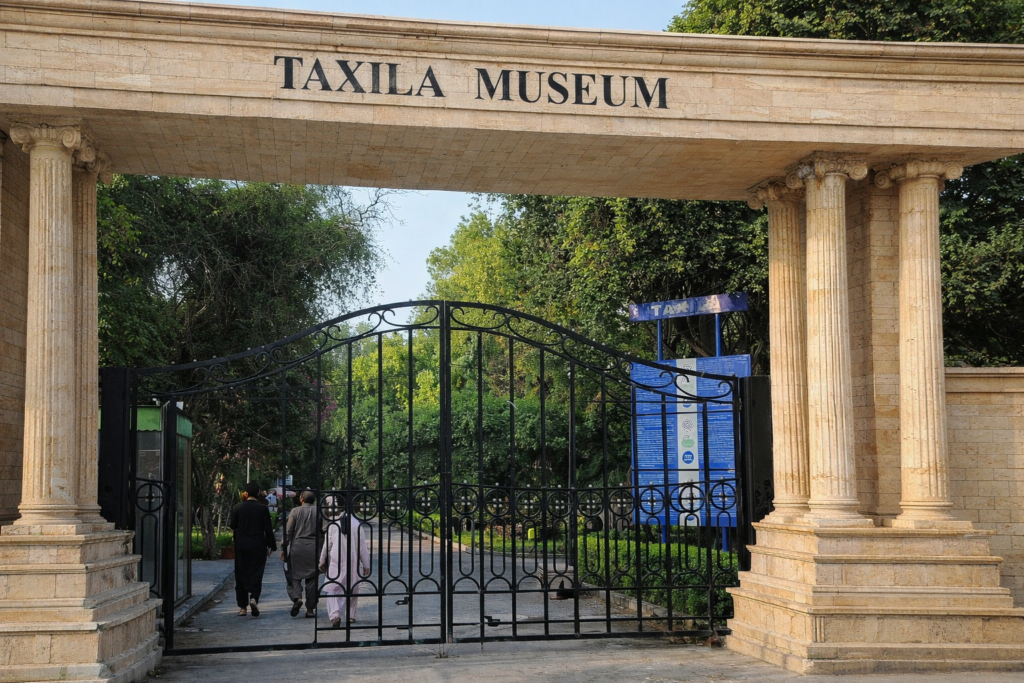
The most practical published visitor details I could verify in official materials come from Pakistan Tourism Development Corporation (PTDC) brochures. One describes the museum as a colonial-era site museum established in 1918, on the Taxila–Haripur Road beside the earliest historic city area (Bhir), with galleries that include stone/stucco sculpture, architectural fragments, coins, jewelry, and daily-life objects. A second PTDC “Buddhist Heritage Trail” brochure publishes the key planning details most people search for (taxila museum timing): summer and winter opening hours, the first-Monday monthly closure, and indicative ticket prices for Pakistani nationals and foreigners.
Because hours and fees can change, this post also flags what is dated and what to verify before you travel.
The drive out of Islamabad is quick at first, then suddenly spacious. The city’s clean lines fall behind you, and the landscape begins to look older than any modern boundary. That shift is exactly what the Taxila Museum is for: it’s not merely a building with artifacts, but a story engine for a valley that contains more than one “Taxila.”
UNESCO describes Taxila as a vast serial world-heritage landscape that includes early settlement mounds, later planned cities, and a wide spread of Buddhist stupas and monasteries. So when someone searches “taxila museum,” what they often want is a reliable starting point: a place that makes the ruins intelligible before the sun and dust make everything feel the same.
This guide is written in English (en-US) and aims to match the main search intent behind taxila museum pakistan, while weaving that practical information into the longer story of Pakistan’s Buddhist-era heritage.
Why Taxila Matters Before You Walk Into the Taxila Museum
The Short Version of a Very Long History
UNESCO frames Taxila as a crossroads site on a branch of the Silk Road linking to the West, and notes an “apogee” between the 1st and 5th centuries. UNESCO also highlights the core urban sequence of Bhir, Sirkap, and Sirsukh.
A human way to read that sequence is this: Taxila kept reinventing itself politically, religiously, and artistically because it sat where long-distance connections converged. UNESCO also notes that Bhir mound is associated with Alexander the Great’s entry into Taxila in 326 BCE.
This is why the Taxila Museum is such a powerful first stop. The museum offers the “portable” evidence sculpture fragments, coins, jewelry before you confront the “immovable” evidence outside: walls, streets, and stupa courts.
A Timeline You Can Keep in Your Pocket
Taxila Eras and Museum Milestones
- 6th c. BCE: Bhir mound as earliest historic city phase
- 326 BCE: Alexander the Great linked with Taxila
- Mid-2nd c. BCE: Sirkap founded with grid planning
- 1st–5th c. CE: Buddhist peak period
- 5th c. CE: Decline of monastic sites
- 1918: Museum foundation laid
- 1928: Museum opened to the public
- 1980: UNESCO World Heritage inscription
- 2024: Digital curation phase
- 2026: UNESCO Director-General visit
For readers who want the taxila museum history in one line: the museum was founded in 1918, opened in 1928, and is closely tied to excavations led by Sir John Marshall.
Inside the Taxila Museum: What You Are Really Seeing
Gandhara Art Explained Simply
The heart of the Taxila Museum is Gandhara art an artistic tradition blending Buddhist themes with Greek-influenced aesthetics.
A PTDC brochure describes the museum as housing one of the finest collections of Gandhara art excavated from the Taxila valley, displayed in subject-wise galleries with:
- Stone and stucco sculpture
- Architectural elements
- Coins and jewelry
- Everyday objects
Academic research also shows how Gandharan motifs reflect cross-cultural influences, making the museum globally significant.
A key point: conservation matters. Some stucco pieces show signs of aging, which is why respectful visitor behavior is essential.
What to Look for on a First Visit
Build your visit around three themes:
- Sculpture (main storytelling medium)
- Coins and jewelry (trade and economy)
- Everyday objects (real-life context)
Planning Your Visit to the Taxila Museum
Key Visitor Information
Taxila Museum Location
Located on Taxila–Haripur Road near Bhir mound.
Nearest Transport
About 32 km from Islamabad. Easy day trip by car.
Taxila Museum Timing / Opening Hours
- Summer: 8:30 AM – 5:00 PM
- Winter: 9:00 AM – 4:00 PM
- Closed: First Monday of every month
Tip: Hours may change during Ramadan.
Taxila Museum Ticket Price
- Pakistani nationals: PKR 20
- Foreigners: PKR 500
Tip: Carry small cash and confirm updated prices.
When to Go: Best Time to Visit
Summer (May–September) is very hot.
Winter (October–April) is cooler and ideal.
Best strategy:
Visit the museum early, then explore one nearby site slowly.
Practical Itineraries Starting with the Taxila Museum
Half-Day Museum Loop
- Taxila Museum
- Bhir Mound
- Sirkap
- Return
Family-Friendly Plan
Start at the museum (comfortable, shaded), then visit one outdoor site.
For Researchers & Photographers
The museum is undergoing digital documentation work.
Respect staff, ask before photography, and follow guidelines.
Conclusion
A good museum teaches you how to see. That is the real value of the Taxila Museum. It transforms scattered ruins into a connected story of civilizations, trade, and faith.
Plan a thoughtful day trip from Islamabad or Rawalpindi. Start early, explore slowly, and experience one of Pakistan’s most important heritage sites with understanding—not just sightseeing.
FAQ: People Also Ask
Where is the Taxila Museum located?
On Taxila–Haripur Road near Bhir mound.
What is the Taxila Museum famous for?
Gandhara art, sculptures, coins, and ancient daily-life artifacts.
What are the Taxila Museum opening hours?
Summer: 8:30–5:00
Winter: 9:00–4:00
Closed first Monday monthly.
What is the ticket price?
PKR 20 (locals), PKR 500 (foreigners).
Is it a UNESCO site?
The museum is part of the wider UNESCO-listed Taxila archaeological complex.
How long should you spend?
1–2 hours inside, plus nearby ruins.