If you are looking for a travel destination that blends Mughal grandeur, rich history, and natural beauty, Hiran Minar is the answer. Tucked away in the heart of Punjab, this stunning monument is one of Pakistan’s most underappreciated heritage sites and it deserves a top spot on every traveller’s itinerary.
Whether you are a history enthusiast, a photographer chasing the perfect golden-hour shot, or simply a curious traveller looking for a meaningful day trip, this complete guide covers everything from its rich history and location to travel tips, FAQs, and what to expect when you arrive.
What Is Hiran Minar? A Monument Born From Love
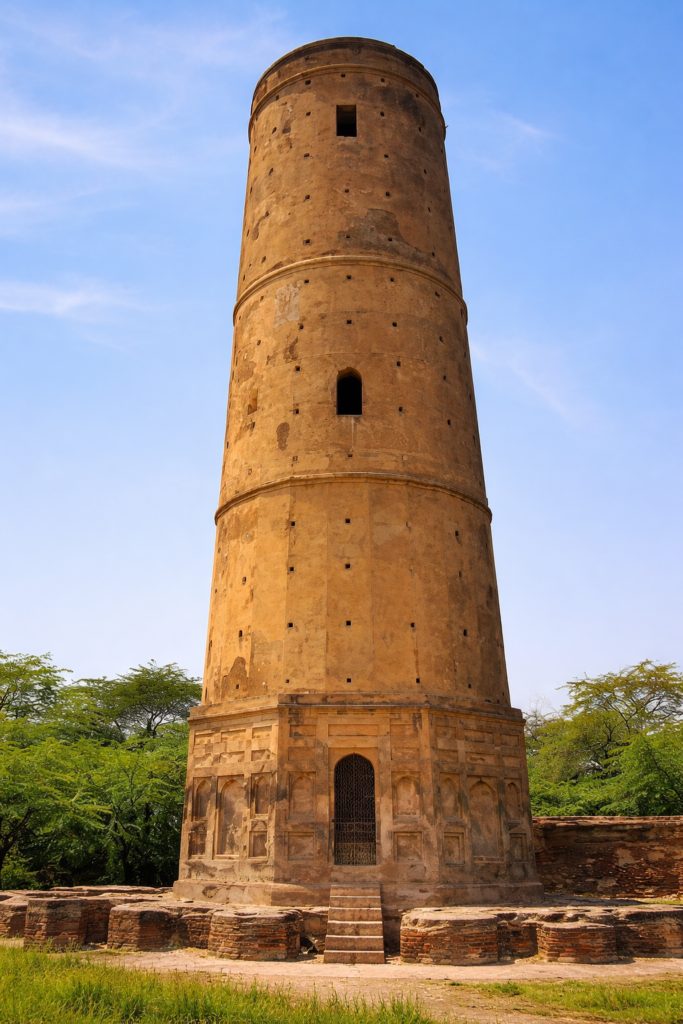
Hiran Minar, which literally translates to “Deer Minaret” or “Antelope Tower,” is a Mughal-era monument located in Sheikhupura, Punjab, Pakistan. The complex is famous not only for its remarkable architecture but also for the extraordinary story behind its construction.
The Mughal Emperor Jahangir built the monument in the early 17th century as a tribute to his beloved pet deer, Mansraj. The emperor had an unusually deep emotional bond with this deer. When Mansraj died, Jahangir was so grief-stricken that he ordered the construction of this tower in the deer’s memory. Inside the minar lies the grave of Mansraj making it one of the very few monuments in the world built by a king in honour of an animal.
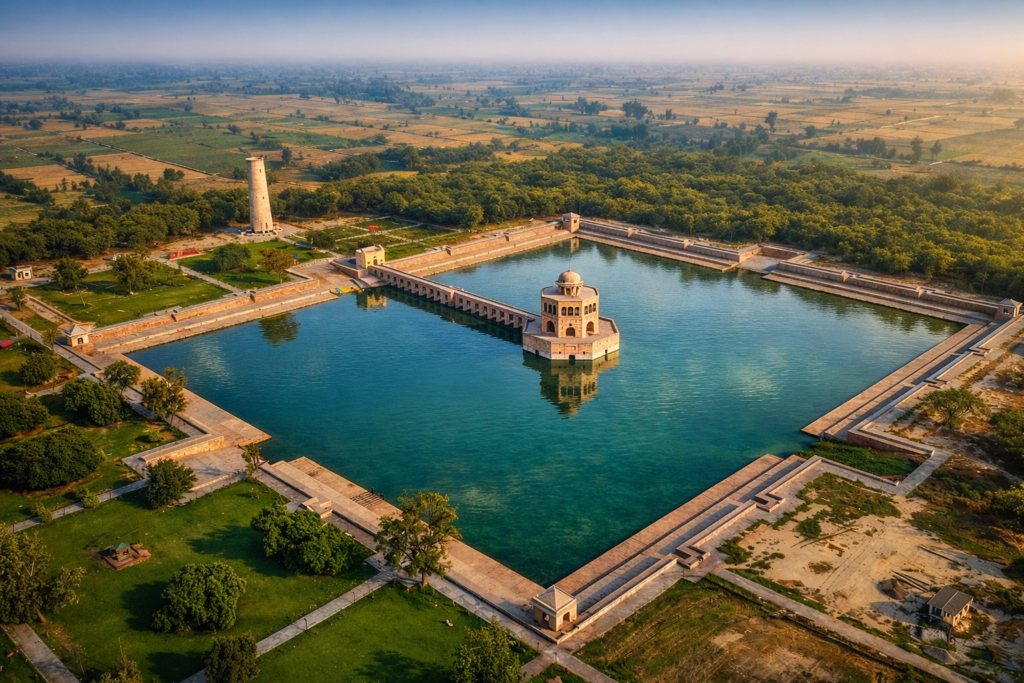
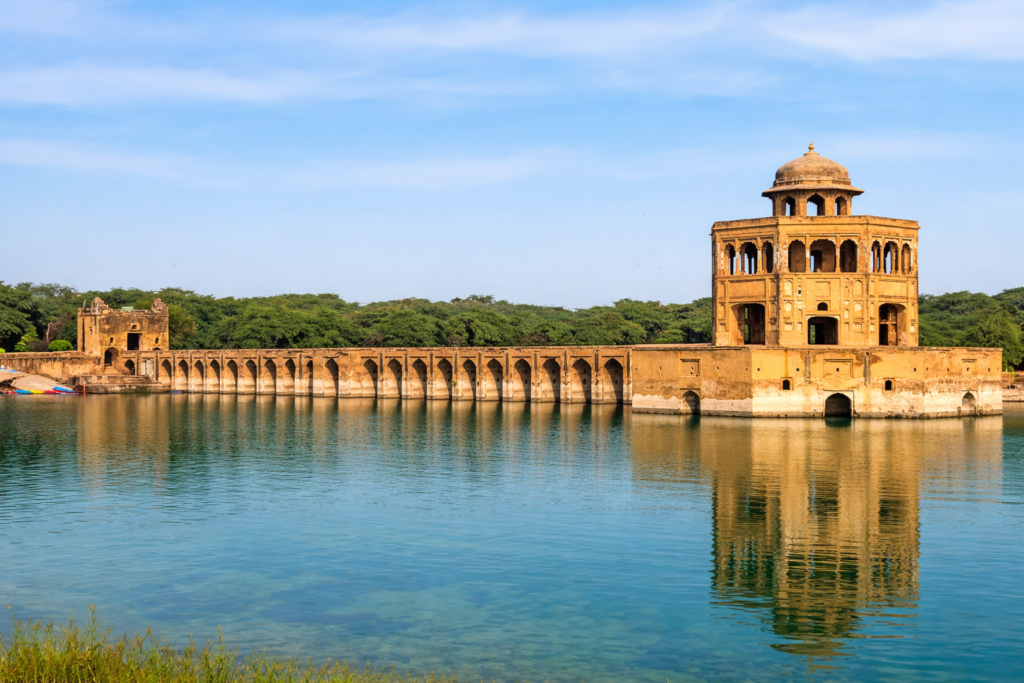
The complex also features a large ornamental tank (water reservoir), a baradari pavilion (a twelve-door open hall) situated in the middle of the tank, and a causeway that connects the pavilion to the mainland. The entire complex showcases the classic Mughal love for symmetry, water features, and graceful stonework.
Hiran Minar History: The Story of an Emperor and His Deer
The Mughal Era and Emperor Jahangir
Emperor Jahangir, who ruled the Mughal Empire from 1605 to 1627, was known for his deep appreciation of nature, art, and animals. He maintained elaborate hunting grounds near Sheikhupura, which were known as the royal shikargah (hunting reserve). This area was one of his favourite royal retreats.
Among his many animals, Jahangir kept a special deer named Mansraj. According to historical records from the Tuzk-i-Jahangiri (Jahangir’s own memoir), the emperor held Mansraj in the highest regard. The deer would come to him at his call, and Jahangir often described the animal in deeply affectionate terms. When Mansraj passed away, Jahangir reportedly mourned the loss profoundly.
Construction and Architectural Development
The main tower (minar) was built around 1606 CE, shortly after Mansraj’s death. The tower stands approximately 30 metres tall and is constructed from baked bricks with intricate ornamentation. A circular staircase inside leads to a viewing platform at the top, which historically offered panoramic views of the royal hunting grounds.
The large tank and the baradari pavilion were added later, likely during the reign of Shah Jahan, who also completed many of his father’s unfinished projects across the subcontinent. The baradari is an elegant open structure with multiple arched bays, sitting gracefully in the centre of the shimmering water tank. This sight remains just as breathtaking today as it must have been four centuries ago.
The monument has been designated a national heritage site in Pakistan and is protected by the Archaeology Department of Punjab. Restoration work over the decades has helped preserve its structure, though more conservation efforts are always welcome.
Hiran Minar Location: Where Is Hiran Minar Located?
The monument is located in Sheikhupura, a city in Punjab Province, Pakistan. Sheikhupura is one of Punjab’s historically significant cities and sits to the northwest of Lahore. The full address of the complex is:
• City: Sheikhupura, Punjab, Pakistan
• Coordinates: Approximately 31.7167° N, 73.9833° E
• Nearest major city: Lahore (approx. 40 km away)
The site is easy to find and well-signposted on the main Sheikhupura road. Google Maps and other navigation apps list it accurately and provide directions from most locations in Punjab.
Hiran Minar Distance From Lahore
One of the most frequently searched questions on this site is the distance from Lahore to Hiran Minar. The good news is that it is very close, approximately 35-40 kilometres away making it one of the most accessible day trips from the city. Under normal traffic conditions, the drive takes 45 minutes to 1 hour via Sheikhupura Road or GT Road.
How to Get There:
• By Car: Take the Sheikhupura Road from Lahore. Once in Sheikhupura city, follow the signboards to the monument. The drive is straightforward and takes about 50 minutes from central Lahore.
• By Rickshaw or Taxi: From the Sheikhupura bus terminal, local rickshaws and taxis are readily available to take you to the site for a small fare.
• By Bus: Public buses and minibuses run frequently between Lahore’s Qila Gujjar Singh area and Sheikhupura. The bus ride costs very little and takes about 1 to 1.5 hours.
What to See and Do at Hiran Minar
A visit to this complex is more than just looking at an old tower. The site offers several distinct experiences and attractions that cater to visitors of all ages and interests.
1. Climb the Minar
The most iconic feature of the complex is the tall brick minaret itself. You can climb the narrow internal staircase to the top for a rewarding view of the surrounding landscape. On clear days, you can see the tank, the baradari, and the green plains of Punjab stretching into the distance. Wear comfortable shoes and take care on the steep steps inside.
2. The Baradari Pavilion and the Tank
The baradari pavilion, a beautifully proportioned twelve-arched structure sitting in the middle of the large tank is perhaps the most photogenic element of the complex. Walk across the causeway to explore it up close. In the early morning or late afternoon, the pavilion’s reflections in the still water create a perfect mirror image that is truly spectacular.
3. The Grave of Mansraj
Inside the base of the minar lies the actual grave of Mansraj, Jahangir’s beloved deer. This small, quiet space carries an unexpectedly emotional weight when you consider that an emperor ordered a tower built here out of pure grief and love. It is a uniquely human moment preserved in stone and a reminder of how closely intertwined human and animal lives have always been.
4. Boating on the Tank
During weekends and holidays, small paddle boats and rowboats are available for rent on the tank. This is a favourite activity for families and couples, and a wonderful way to enjoy the surroundings from a different perspective. Children particularly enjoy this, making it a great destination for a family outing.
5. Photography and Picnicking
The lush green grounds around the complex are well-maintained and ideal for a relaxing picnic. Many local families visit on weekends to enjoy the open air, and the park-like setting makes it a welcoming space for everyone. Photographers will find endless opportunities here from the grand architectural shots of the minar and baradari to intimate detail shots of the Mughal brickwork and carved stonework.
Practical Visitor Information: Everything You Need to Know
Opening Hours and Entry Fee
• Opening Hours: The site is generally open from 8:00 AM to 6:00 PM, seven days a week.
• Entry Fee: There is a nominal entry fee (typically PKR 20–50 per person), which is subject to change. Entry for children under a certain age is often free or discounted.
Best Time to Visit
The best time to visit is during the cooler months of October through March. Punjab’s summers can be intensely hot, with temperatures frequently exceeding 40°C making outdoor exploration uncomfortable. In contrast, the winter months offer pleasant weather, clear skies, and vibrant greenery, making the entire complex look its most beautiful.
For the best photography, arrive either in the early morning (golden hour after sunrise) or late afternoon (an hour before sunset). The light during these times casts a warm glow on the ancient bricks and creates stunning reflections on the tank’s surface.
What to Bring
• Comfortable walking shoes (especially for climbing the minar)
• Water and light snacks (some vendors are available on-site)
• Sunscreen and a hat if visiting in warmer months
• Camera or smartphone for photography
• A picnic blanket or mat if you plan to spend extended time in the gardens
Nearby Attractions: Combine Your Trip for Maximum Value
Since you are already making the trip to Sheikhupura, consider combining your visit to the monument with nearby heritage sites to make the most of your day.
Sheikhupura Fort (Mughal Fort)
Just a few kilometres from Hiran Minar, Sheikhupura Fort is another magnificent Mughal structure built by Emperor Jahangir around the same period. The fort features impressive bastions, a Rang Mahal (Palace of Colours), and beautiful painted interior walls. Though partially in ruins, it remains one of the finest examples of Mughal military architecture in Punjab and can be combined with a visit to this site in a single day.
Lahore’s Mughal Heritage Trail
If you are visiting from Lahore, consider turning your trip into a broader Mughal heritage day. After exploring both monuments, drive back to Lahore and spend the evening at the Lahore Fort, Badshahi Mosque, or the Shalimar Gardens. Together, these sites paint an extraordinary picture of the Mughal civilization at its peak.
Conclusion
A visit to Hiran Minar is far more than a typical sightseeing trip. It is a journey into a world where a powerful emperor expressed grief and love through stone and water — and that emotional resonance, even centuries later, is what makes this site so unforgettable. From the soaring minar to the tranquil tank and the elegant baradari rising from its still waters, this timeless monument captivates every visitor who steps through its gates.
For Pakistanis, this is a reminder of the extraordinary civilisation that once flourished in Punjab — and a call to appreciate and protect these irreplaceable heritage sites. For international visitors, it is proof that Pakistan’s cultural riches go far beyond what the world often imagines.
So the next time you are in Lahore and looking for a meaningful day trip, do not miss this incredible gem. Pack some snacks, charge your camera, and make the 40-kilometre drive to Sheikhupura. You will come back with stunning photographs, a deeper appreciation for Mughal history, and a story worth telling.
Ready to Plan Your Visit?
Have you visited Hiran Minar before? We would love to hear about your experience! Drop a comment below and share your favourite memory or photograph from this magnificent Mughal gem.
If you found this guide helpful, please share it with fellow travellers and history lovers help more people discover the hidden gems of Pakistan’s incredible heritage.
And if you are planning a road trip through Punjab’s Mughal heritage trail, subscribe to our blog for more in-depth travel guides, photography tips, and destination inspiration from across beautiful Pakistan.
Frequently Asked Questions About Hiran Minar
Q: Who built the Hiran Minar?
It was built by Mughal Emperor Jahangir in memory of his beloved pet deer, Mansraj, around 1606 CE. Additional structures, such as the baradari pavilion, were added by Shah Jahan.
Q: Where is Hiran Minar located?
It is located in Sheikhupura, Punjab, Pakistan approximately 40 km from Lahore.
Q: What is the Hiran Minar distance from Lahore?
The distance from Lahore to the site is approximately 35–40 kilometres. The drive typically takes 45 minutes to 1 hour, depending on traffic.
Q: Is Hiran Minar worth visiting?
Absolutely. This monument offers a unique combination of fascinating history, stunning Mughal architecture, scenic water features, and a peaceful atmosphere all within easy reach of Lahore. It is ideal for families, history lovers, photographers, and anyone looking for a meaningful and beautiful day trip in Punjab.
Q: Can you climb to the top of Hiran Minar?
Yes. Visitors can climb the minaret’s internal staircase to reach the top viewing platform. The stairs are steep and narrow, so comfortable footwear is recommended.
Q: Is Hiran Minar suitable for children?
Yes, the site is very family-friendly. The open grounds, boating facilities on the tank, and picnic areas make it an enjoyable outing for all ages. However, supervise young children near the water and on the minar staircase.